Thursday, January 4, 2018

Amazon Year in Review: The 5 Biggest Trends of 2017

By |January 3rd, 2018|Insights
2017 was a very big year for Amazon, a year filled with major acquisitions, international expansions and technological innovations. The company also managed to be responsible for an estimated 44% of all U.S. ecommerce sales in 2017 and fully 4% of the country’s total retail sales, a figure in the area of $200B.Amazon 2017 top product group sales
*Rollups are supercategories of related products and/or groups compiled by One Click Retail; for example, Consumer Electronics
includes Laptops, Hands Free, Headphones, Computer Components, and several other categories.2017 Amazon revenue data
Amazon set a new sales record on Prime Day, July 11th, and then broke that record on Cyber Monday, November 27th. And over the course of one week this holiday season it signed up over 4 million new Prime members. Yes, Amazon is on a roll, but what’s behind its incredible success? We’ve looked back on a year of Amazon sales data and picked out the five biggest trends that have shaped Amazon in 2017:

Amazon Automated Marketing

Amazon spent 2016 quietly building its automated marketing system, then doubled down with some major upgrades to the system in 2017. An increased level of sophistication now allows brands to bid on a far broader range of keywords, targeting mobile, desktop, and/or app users, and even integrate with email marketing and vendor-powered coupons.
Today, over 50% of product searches begin on Amazon – and only Amazon has the ability to convert click-throughs to sales. With these added benefits and some killer ROI metrics, many brands have started taking their search budgets out of Google and Facebook and putting their money on Amazon.

Consumables and Private Brands

In the first half of 2017, sales of Consumables on Amazon (including Grocery, Health & Personal Care, Beauty and Pet products), were on FIRE with over 35% YoY growth. Then to add fuel to the fire, Amazon announced the acquisition of Whole Foods, and along with it what is now its second-largest private brand: 365 Everyday Value, with over $10M in estimated 2017 sales.
In the chart below, you can see how Amazon Fresh sales began to see an increased growth right after the takeover announcement even before any new products were released, and then spiked again after 365 became available on Amazon.  Which raises the question: will this create long-term changes and tailwinds for Amazon? Will 300-ish Whole Foods stores be enough to compete meaningfully in the brick-and-mortar space against Walmart’s 4000+ stores? Will Amazon fundamentally change its strategy in Fresh to integrate Whole Foods?2017 Amazon fresh grocery sales
Amazon isn’t one to put its eggs in one basket. 2017 was a watershed year for Amazon’s private brands across all product groups, with combined estimated sales of $150M in its two largest categories, Home and Electronics. Overall, Amazon’s private brands don’t limit themselves to specific categories – the biggest brand, AmazonBasics, earned an estimated $400 million this year.
In 2017, Amazon continued to introduce new brands and new product lines, with strong moves into Diapers (Mama Bear: 100% YoY growth), Furniture (Rivet / Stone & Beam) and Activewear (Goodsport, Peak Velocity, and Rebel Canyon). For a detailed breakdown of Amazon’s private brands in 2017, see our Private Brands Year-End Review.

Gadgets and Home Automation

Everybody knows the success story of Amazon’s Echo line of smart speakers: Echo Dot, the miniature (and cheaper) version, was the single bestselling item on Amazon this holiday season, with millions sold. But this is just one small example of how gadgets captured the public’s imagination across nearly all product groups, and at the top 10 items for first-party (1P) sellers in 2017 prove it.2017 top revenue items Amazon ecommerce

Amazon.com Top 1P Items, 2017

Product GroupRank In GroupTitle
#1Kitchen1Instant Pot DUO80 8 Qt  7-in-1
#2PC1Acer Aspire E 15 Notebook
#3Kitchen2Instant Pot DUO60 6 Qt 7-in-1
#4Health & Personal Care1Fitbit Charge 2 Black, Large
#5Health & Personal Care2Bounty Paper Towels, 12 Count
#6PC2Samsung 850 EVO 500GB SSD
#7Furniture1Zinus Memory Foam Mattress, Queen
#8PC3Google Wifi system (set of 3)
#9Electronics1Bose QuietComfort 35 Wireless Headphones
#10Home1iRobot Roomba 650
*Amazon first-party (1P) sellers only.
Two sizes of the Instant Pot were the 1st and 3rd bestselling 1P item on Amazon in 2017, with the 8-quart model generating 40% of all annual unit sales during Prime Week alone. The #4 item, the Fitbit Charge 2, was the top Health & Personal Care item overall. Bose Wireless Headphones and the iRobot Roomba were also the top items in their product groups. This trend extends to toys (the Anki Cozmo robotic was a top toy this year) and even pet products (the Petcube Camera was #2 in Pets).
Taking existing everyday items and making them SMARTER has proven to be a huge competitive advantage for brands, and of course Amazon has found a way to capitalize on this. Amazon’s Alexa, the voice-activated personal assistant originally developed for the Echo smart speaker, has helped drive a boom in home automation. Alexa-enabled devices such as Nest Thermostats and Video Doorbells, and the TP-Link Smart Plug—the #1 item in Home Improvement—helped drive a 71% YoY growth in Amazon’s Home Automation sales. In 2017, many leading brands such as iRobot and Philips integrated Alexa compatibility into their latest models. For example, this year’s new Roomba 690 is Alexa-enabled and was the #20 bestselling 1P item overall.
This trend confirms Alexa as a major technology advantage in Consumer Electronics, Amazon’s largest product group of 2017 at an estimated $8.4B in sales.

China and No-Name Brands

Between Amazon’s private brands and the continued success of established heavy hitters like the GoPro, Roomba and Instant Pot, brands would be forgiven for thinking Amazon is a hard market to break into, but that couldn’t be further from the truth. Amazon’s endless shelf has created a huge opportunity for no-name white label brands to reach an audience.
Sellers that previously would have few options to compete are now experiencing a great deal of success with both 1P and 3P items. In 2017, the trend is the strongest in the electronics space, with most white label products currently coming out of China, but it’s quickly spreading across product groups and is a major growth opportunity for emerging brands in 2018.

Millennial Families

Every major trend we see across 2017 can be explained by the fact that more of Amazon’s core demographic (millennials) are growing up: they’re increasingly owning homes, raising children, and buying a TON of stuff to go with it.  The bulk of the estimated $5.5B in Home & Kitchen sales comes from young people – those who shop from Amazon the most – investing in their homes and in their families.
Millennials are now the major furniture-buying demographic, driving a growth of 33%, and are the key audience in Amazon’s Baby, Health & Personal Care, Kitchen and Home Automation product groups.  Zinus markets its memory foam mattress to the needs of young couples who care about quality but may have both space and budget limitations, and in return its top item brought in 2% of Amazon’s total Furniture & Mattresses sales. Google recognized that children who use screens from a very young age need a strong and reliable whole-household internet connection; and in return its Home WiFi System was the bestselling new item of the year.
Ultimately, success – for both Amazon itself and for brands that sell through the platform – comes down to knowing your audience. It’s clear that Amazon catered to the right crowd in 2017, and the brands that correctly understood who their products were for – and who they were most useful to – are the ones that had a very good year.
In choosing only five trends, we’ve just skimmed the surface of Amazon’s 2017, a year which also included international expansions, further steps taken into the brick-and-mortar space, and still more technological innovations. For more insights into the inner workings of Amazon, the latest ecommerce trends, and what makes products work on Amazon, keep following OCR’s insights into the New Year.


A Baker's Dozen Of Provocative Retail Predictions For 2018

 
, I write on the reinvention of retail in the age of digital disruption  Opinions expressed by Forbes Contributors are their own.

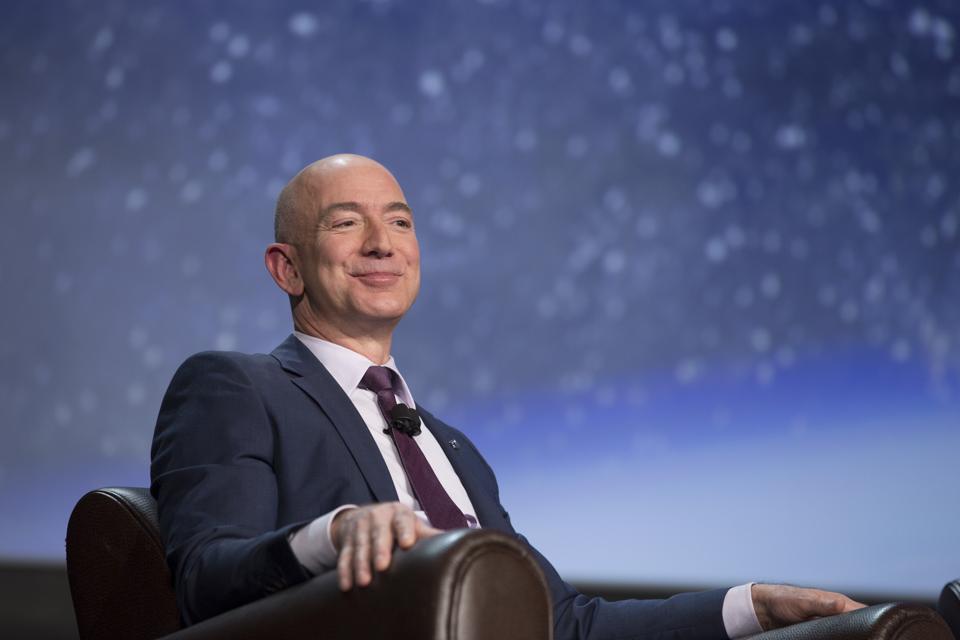
Jeff Bezos, Amazon's CEO, in 2016. Photographer: Matthew Staver/Bloomberg
2017 was one of the most transformative years for the retail industry that I can remember. 2018 is likely to be just as wild and woolly, albeit in somewhat different ways. Here's my attempt to go beyond the more obvious predictions and go out on the limb just a bit.
    1. Physical retail isn't dead. Boring retail is. A lot of stores closed in 2017. Often forgotten is that a lot opened as well. Many stores will close in 2018. Many will open as well. By this time next year roughly 90% of all retail will still be done in physical store, so please can we shut up already about the "retail apocalypse." The train left the station years ago on products that could be better delivered digitally. What's happened most recently has everything to do with a long over-due correction of the overbuilding and the collapse of irrelevant, unremarkable retail. The seismic changes in retail have laid waste to the mediocre and those that have been treading water in a sea of sameness. Great retail brands (Apple, Costco, Ulta, Sephora, TJX, etc.) continue to thrive, despite their overwhelming reliance on brick & mortar stores. Ignore the nonsense. Eschew the boring. Chase remarkable.
    2. Consolidation accelerates. In many aspects of today's retail world, scale is more important than ever and this will continue to drive a robust pace of mergers and acquisitions. In some cases, capacity must come out of the market to create any chance for decent profits to return. The department store space is a great example. Moreover, large, well capitalized companies will take advantage of asset "fire sales" or technology plays to complement their skills and accelerate their growth.
 
    1. Honey, I shrunk the store. Small is the new black in many ways. Many chains will continue to right-size their store fleets to better align with future demand. Others will reformat or relocate to smaller footprints to better address the role of online shopping. We can also expect to see more small format stores as a way to cost effectively extend customer reach and further penetrate key customer segments.
    2. The difference between buying and shopping takes center stage. Buying is task-oriented, more chore than cherished, and is typically focused on seeking out great assortments, the lowest price and maximum convenience. This is where e-commerce has made the greatest inroads. Increasingly, Amazon dominates buying. Shopping is different. It's experiential, it's social, tactile--and the role of physical stores is often paramount. The trouble is when retail brands don't understand the distinction and invest their energies trying to out-Amazon Amazon in a race to the bottom. And, as Seth reminds us, the problem with the race to the bottom is you might win. Or worse, finish second.
 
  1. Amazon doubles down on brick & mortar. For Amazon to continue it's hyper-growth--and eventually make some decent profits--it needs to go deeper into the world of shopping vs. buying (see above). And this means greater physical store presence, particularly in some key categories like apparel and home. In addition to opening its own stores I expect at least one major acquisition of a significant "traditional" retail brand.
  2. Private brands and monobrands shine. A key part of winning in the age of Amazon and digital disruption is finding ways to amplify points of differentiation. Most often this can be done through product and experience. With the over-distribution of many national brands and the ease of price comparison, more and more smart retailers are looking for ways to differentiate on unique product. For some--including Amazon--deepening their commitment to private brands can be a source of competitive advantage. Well positioned monobrand retailers like Uniqlo, H&M, Primark and Warby Parker also will continue to steal share from less compelling multi-brand stores.
  3. Digital and analog learn to dance. As much attention as e-commerce gets it turns out digital channels' influence on brick & mortar shopping is far more important for most brands. In fact, many retailers report that more that 60-75% of their physical store sales are influenced by a digital channel, hence the rise of the term "digital-first" retail. Side note: anyone who has adopted this term in the last 12 months has simply informed us that they were paying no attention to what has been going on in retail for nearly a decade. Regardless, clearly in-store technology must evolve to support this rapidly evolving world. Yet as much as technology can enhance the shopping experience the role of an actual human being in making the customer experience intensely relevant and remarkable should not be forgotten. Many retailers would be wise to see sales associates as assets to invest in, not expenses to be optimized.
  4. The great bifurcation widens. And it's death in the middle. It's been true for some time that the future of retail will not be evenly distributed. What became abundantly clear in 2017 is how different the results have been between the industry's have's and have not's. At one end of the spectrum retailers with a strong pricing story, from dollar stores to off-price to Costco and Walmart, did well. At the other end of the spectrum, many luxury brands and well focused specialty retailers continued to thrive. Meanwhile the fortunes of Sears, Macys, JC Penney and others who failed to get out of the undifferentiated and relentlessly boring middle diverged markedly. This will end badly.
  5. Omnichannel is dead. Digital-first, harmonized retail rules. Too many retailers chased being everywhere and ended up being nowhere. The search for ubiquity led to disjointed, poorly prioritized efforts that fattened the wallets of consultants but often did little to create what most customers want and value. The point is not to be everywhere, but to be relevant and remarkable where it matters, to understand the leverage in the customer journey and to root out the friction and amplify those elements of the experience that make the most difference. Most customer journeys will start in a digital channel (and more and more this means on a mobile device) and the challenge is to make all the potentially disparate elements of the shopping experience sing together as a harmonious whole.
  6. Pure plays say "buh-bye." With rare exception, so-called "digitally native" brands were always a bad idea. Despite venture capitalists initial enthusiasm--and Walmart's wet kiss acquisitions--only a handful of pure-play models had any chance to scale profitably. And many arrogantly declared they'd never open stores (I'm looking at you Bonobos and Everlane) when anyone who understood the high cost of returns and customer acquisition saw a physical store strategy (or bankruptcy) as inevitable. We've already seen some high profile blowups and more are surely on the way (Wayfair? Every meal delivery company?). This year the shakeout will continue and it will become clear that for the brands that survive most of their future growth will be driven by brick & mortar stores not e-commerce.
  7. The returns problem is ready for its close up. Product returns were the bane of direct-to-consumer brands well before e-commerce was a thing. Lands' End, Victoria's Secret, Neiman Marcus and many others regularly experienced return rates in excess of 30% from their catalog divisions. When you could actually charge for delivery this was a problem, but not necessarily the achilles heel. The near ubiquity of free returns & exchanges may be a consumer bonanza, but it drives a lot of expensive behavior and makes much of e-commerce unprofitable. Customers regularly order multiple colors and/or sizes of the same item hoping that one of them will fit or be to their taste. The retailer then eats the expense of some or all of the items coming back, including handling costs and often additional merchandise markdowns (which can be especially ugly for seasonal or fashion items). The disproportionate growth of e-commerce means outsized growth and expense for retailers. It's not sustainable. Consider yourself warned.
  8. "Cool" technology underwhelms. There is plenty of incredibly useful technology that continues to transform retail, notably around mobile, predictive analytics and the like. There is also a lot that ranges between gimmicky and not yet ready for prime time. Augmented and virtual reality? Wearables? IotT? Blockchain? Digital mirrors? Someday, maybe. 2018? Not so much.
  9. The search for scarcity and the quest for remarkable ramps up. As most things came to be available to just about anyone, anytime, anywhere, anyway, access to great product was no longer scare. As various marketplaces, peer-to-peer review sites and various forms of social media made data about product quality, reliable alternatives and pricing universally available, information was no longer scarce. As various tools emerged to put the customer in charge, the retail brand's advantages were diminished and the power of the channel started to evaporate. It's really hard to get folks to pay for what is widely available for free. And it turns out the moat that protected a lot of brands has dried up and been paved over. Good enough no longer is. The brands that will not only survive, but actually thrive in 2018 and beyond, will deliver consistently and remarkably on things that are highly valued by customers, can be seen as scarce and can be made proprietary to that brand. It's not easy, but frankly, more times than not, it's the only choice.

Wednesday, January 3, 2018

If you haven’t heard of Amazon Customer Insights, you’re not alone. Though the program was launched this summer, it seems it has flown largely under the radar for most sellers.
And considering its pricing and limitations? It’s really no surprise, either.

Amazon Customer Insights: The Details

Amazon Customer Insights is a program designed for sellers, allowing them to solicit feedback – in the form of a single, solitary question – to discover why Amazon customers buy, what they like and what their purchasing habits are.
Amazon customer insights
“Seller can use this feature to provide useful information for product iteration/product development,” Leo Carrillo, Lead Marketplace Channel Analyst at CPC Strategy said.
“Keep in mind, there is a fee associated ONLY when customers respond to the question.”
Currently, the cost to use Amazon Customer Insights is $5 per response. The minimum survey size is 100, meaning the least you’ll pay for a one-question Insight survey is $500 a pop.
Though you can survey up to 2,500 customers, you’ll only get data on 100 of those responses, so going above and beyond may not be worth the cost in most situations.
There is also no discount for bulk Insight surveys, so unless the bigger sample size is absolutely necessary for what you’re trying to achieve, consider starting with just the initial 100 and moving up from there.
Insights has multiple pre-built questions you can use, divided into three categories: purchase behavior, product awareness and product opinion. You can also create a custom question based on the exact insights you’re looking to gather.

Built-in questions include:

  • What is the most important factor in your selection of our product?
  • How did you first hear about our product?
  • How likely are you to recommend our product to others?Amazon customer insights
After you’ve settled on a question, you can choose up to four targeting groups:
  1. Amazon customers who have purchased your products
  2. Amazon customers who have viewed your products
  3. Amazon customers who viewed your products but didn’t buy them
  4. Amazon customers who bought a similar product in the same Amazon category

Once you’ve chosen targeting options, your proposal will go to the Amazon team, and they’ll weigh in on its feasibility, approve it and send you the final pricing.
There is a chance your final tally could be higher than just $5 a pop once Amazon factors in other details, but don’t expect it to be any less.
At the end of your Insights campaign, you’ll get a response report back from Amazon, which will break down the results of your survey as well as the number and percentage of customers who chose each answer.

Should You Use Amazon Customer Insights?

Now, it’s time for the question of the hour: when, if ever, should you use Amazon Customer Insights?
Well, the price point is certainly a hurdle – especially considering the one-question limitation, but if you craft your question (and potential answers) properly and have a very specific data point in mind, it could work in your favor.
amazon customer insights
Here are a few cases when Amazon Customer Insights surveys could be helpful:
  • You’re looking to bundle products and want to determine which products to include or exclude.
  • You’re selling in an unfamiliar category and want to determine which customers in this segment are looking for.
  • You want to determine what marketing strategies are – or aren’t – bringing customers to your store.
  • You want to know what’s turning customers away from your product – or toward a competitor’s on the site.
  • You need to gauge the efficacy of your pricing strategy, product descriptions or product offering.
  • You need help deciding what products to stock up on for next season or before a big sale.
  • You want to gauge customer satisfaction (this is especially important if your Amazon feedback isn’t so great.)
  • You’re launching a new product and want to hone in on the right marketing or pricing strategy.

To start your Insights survey, go to SellerCentral.Amazon.com/Insights. Click “Projects,” and choose the pre-built question you want to use or add in your own custom one.
Select your targeting options, then, just fill in your ASIN and contact information, and you’re done. You can send the proposal to the Amazon team for approval right away.
There’s a chance Amazon isn’t quite done perfecting its Insights program, and that the price – and flexibility – of the offering could improve in the near future.
If recent months are any indication, Amazon is certainly dedicated to giving its sellers plenty of tools to improve their performance and their bottom line (hello, Early Reviewer program!).
We’ll be watching to see if anything changes on the Insights front, so check back here for developments as they happen.

The dynamics of food donation

With more than a third of the food supply going to waste, Inmar’s Rob Zomok discusses the benefits of donating food for manufacturers and retailers.

Tuesday, January 2, 2018

When running into the grocery store to pick up a few things for dinner, you may or may not be thinking of all the waste that goes into grocery stores. From individual wrappers to plastic bags and plastic packaging, your plastic use can really add up before you even walk out the door. And the numbers don’t lie.
The U.S. Environmental Protection Agency estimates that containers and packaging make up 23 percent of landfill waste. In fact, it’s estimated that the average American creates around four pounds of trash every day, most of which is related to our food habits.
And all that trash? It’s having serious consequences for our planet. There are around 270,000 tons of plastic floating on the surface of the world’s oceans and an estimated 700 marine species are being threatened with extinction as a result of this waste.
But what if there was a type of grocery store that had no plastic packaging, advocated for customers to bring their own bag and offered loose items package free? Sounds like heaven, doesn’t it? Zero-waste stores have been cropping up worldwide over the last few years, from England to Australia, as more and more awareness is drawn to our plastic pollution crisis.
So, if you’re looking for a zero-waste grocery store next time you travel, here are just some of our favorites!

1. The Bulk Market in London, United Kingdom 

The Bulk Market was created by Ingrid Caldironi after she adopted a zero-waste lifestyle and quickly learned that it is quite difficult to maintain, considering traditional grocery stores and supermarkets are all full of plastic.
The Bulk Market offers over 300 products, all stored in glass jars and bulk dispensers. At the store, one can get everything from pasta, legumes, and fresh bread, to bamboo toothbrushes and toilet paper wrapped in paper, not plastic.
To learn more about the Bulk Market, click here.

2. Nude Food in Cape Town, South Africa 

Nude Foods is the South Africa capital’s first plastic-free grocery store, that allows customers to either use their own containers from home or their in-store eco-friendly packaging. Customers will find “non-GMO, healthy and affordable wholefoods and earth-friendly body and home products – all sold by weight.”
To learn more about Nude Foods, click here.

3. Earth.Love.Food in Devon, England 

Earth.Food.LoveThe Earth.Food.Love grocery store was created by Richard and Nicola Eckersley, who were inspired to start the project after their visit to Unperfekthaus, a zero waste shop in Germany. After returning to the UK, the couple opened their own sustainable store. They decided to do so in a place where the shop would make a difference to the city’s local community – that is how they ended up in Devon.
The store sells up to 200 products, each and every one of them pesticide-free, ethically-sourced, and packaging-free. The store’s owners are also dedicated to educating others on the topic of zero-waste living and have already created their own guide to “Setting up your Own Zero-Waste Shop.” Their end goal is to be the inspiration for as many people as possible, and they hope to see many more businesses similar to theirs pop up all around the world.
To learn more about Earth.Food.Love, click here.

4. Original Unverpackt in Berlin, Germany 

Original Unverpackt, Germany’s first zero-waste grocery store, doesn’t offer plastic bags or sell anything that comes in a disposable container, instead offering grains in bulk bins and offering beverage stations where customers can fill up reusable bottles.
For more information on Original Unverpackt, click here.

5. The Fillery in Brooklyn, New York 

Inspired by emerging zero-waste supermarket chains in Europe, Sara Metz had the idea to open up a zero-waste shop in her own community of Prospect Heights, Brooklyn. She named it The Fillery, with the mission of “[improving] the health of our community […] and the environment by offering alternatives to the plastic entombed, chemical-laden options which are ubiquitous in both pantries and landfills worldwide.”
To learn more about The Fillery, click here.

How You Can Help

If there isn’t a zero-waste grocery store in your city, help one come to life! Speak with your local community members and see how a zero-waste store could start. And you certainly don’t need a zero-waste store to start making changes in your own life. Knowing the damage that our plastic habit is wreaking on the planet and marine life, we all have the responsibility to stop this.
As the leading organization at the forefront of the conscious consumerism movement, One Green Planet believes that reducing everyday plastics from our lives is not about giving up anything or sacrificing convenience, but rather learning to reap the maximum benefit from the items you use every day while having the minimum impact.

Subway's 'mystery meat' and 'mushy and rotten vegetables' destroyed the 'Eat Fresh' advantage it spent years building

Subway restaurantJoe Raedle/Getty Images
  • Subway is facing declining sales and hundreds of store closures. 
  • The chain — which long promoted an "eat fresh" philosophy — has failed to keep up with American consumers' demands for local ingredients.
  • Franchisees and workers said that locations can only get one or two shipments of produce a week, sometimes resulting in "mushy and rotting" vegetables. 


Subway has fallen behind on food industry trends — and it could be killing the chain. 
The sandwich chain's US store count dropped by more than 900 in 2017, almost three times as many locations as closed the year before. National sales declined across the US in 2017, people with knowledge of the situation told Business Insider. 
Multiple franchisees told Business Insider that they expect the number of closures to grow in 2018, with one franchisee saying that the company's store count could drop by the thousands. Another said that up to one-third of Subway locations in the US aren't profitable. 
The chain is rolling out a new store design and remodeling locations across the US — a game plan some franchisees say has so far failed to produce results.
"I can tell you that a large majority of the stores around here are for sale, even one of ours," one Subway manager said. "But no one is buying because of the high cost of the remodel coming up. Even the owners know that Subway is dying."
After Business Insider published an article about Subway's closures last week, we received dozens of emails from customers, franchisees, and workers expressing concern and disappointment over Subway's food quality and freshness. 
Here's what insiders say Subway needs to fix on its menu if it wants to survive. 

What it means to 'eat fresh' 

Subway Fresh ForwardAn updated, redesigned Subway location. Courtesy of Subway
Most Subway locations only receive one or two shipments of produce a week, according to more than 10 Subway franchisees and workers who spoke with Business Insider. 
"By the end of the week ... the lettuce is just a massive problem," one franchisee said. After just a few days, it begins to taste like "shredded paper," she said.
Previously, the franchisee — who owns two locations and has been a franchisee for decades — ordered local produce to stock restaurants. The company, she said, forced her to stop doing so. 
"I have voiced my concerns for years regarding the need for daily produce deliveries into our stores ... I want to pay more for a better tasting lettuce and I have been shut down," she said. "Today's consumer is extremely sensitive to preservatives and desire cleaner labels."
Some franchisees who spoke with Business Insider said that weekly or bi-weekly deliveries were a non-issue, and that produce keeps for at least a week. Any problems are what people could expect from any national chain — a few shipments of less-than-stellar vegetables are just part of doing business, they said. 

The plague of 'mushy and rotten' vegetables

subway sandwichAssociated Press
But, other workers, customers, and franchisees disagreed. 
"About half of the vegetables we used were far from fresh. I've personally tasted the ingredients by themselves and they DO NOT taste how you'd normally expect them to," Jessica Gunn, who recently quit a job working at a Subway location in Merced, California, said. 
Another employee, from Southeastern Pennsylvania, said, "A lot of the lettuce we receive is often near-expiry and is already turning brown even though the bags are vacuum sealed. The same goes for tomatoes. Often they are delivered and within a week are mushy and rotting."
In a statement to Business Insider, Subway said that it works with more than 100 family farms and suppliers in the US to help make sure its restaurants have fresh produce. But, the company would not say whether or not produce shipments were only delivered once or twice a week. 
"Our stringent food quality standards ensure the freshest products from farm to sandwich. Franchisees decide when to schedule their orders to make sure they always have fresh produce in [the] restaurant," Dennis Clabby, executive vice president of Subway's independent purchasing cooperative, said in a statement to Business Insider.
Franchisees and workers who oppose Subway's policy, however, say that there is little freedom in scheduling.
And, when it comes to using local suppliers, they say they have few options with the potential threat of having their franchise taken away hanging over their heads. According to a manager from Illinois, a franchisee who used local suppliers instead of going through distributors lost his stores after his practices were discovered. 
"The bread and condiments are of cheaper quality, and they just don't allow local farmers produce in the summer," Scott Godwin, who owned three Subway locations in Virginia until the early 1990s, told Business Insider of the changes that have been made since he cut ties with the chain. 
Godwin continued: "Quality goes down in favor of profits. It's called selfishness."

Changing trends turned Subway's advantage into a problem

Sweetgreen 11A Sweetgreen salad, made with produce delivered to stores daily Hollis Johnson
The rise of super-fresh, super-local restaurants and chains has complicated Subway's produce problems. For example, Sweetgreen, a growing salad chain, has locally and regionally sourced fruits and vegetables delivered to locations every day.
"Today, people are ever more educated on nutrition, food sourcing, and ethical holistic business models," Sara Bamossy, the chief strategy officer at ad agency Pitch, told Business Insider. "To create (or to rekindle) loyalty and sales, it is not enough to label something as 'natural' and it’s not enough to be affordably priced." 
Subway essentially paved the way for a wave of "fresh" chains to succeed. Now, thanks in part to Subway's influence, customers expect more from restaurants, turning the chain's advantage into a huge burden. 
"Subway needs to get back in touch with their roots — freshly baked bread and fresh ingredients assembled with care," said Travis York, the CEO of the creative agency GYK Antler. "These offerings are not only genuine but also different from the competition."
He added: "They can't just toss a bunch of stuff on random bread products and expect it to impress an increasingly discerning public."

Viral scandals damaged the brand

SubwayMarina Nazario/Business Insider
Subway has had some major PR problems that have highlighted its failure to meet customers' increasingly strict demands for fresh food.  
The first was in 2014, when a food blogger started a petition for Subway to remove azodicarbonamide from its bread. Azodicarbonamide was targeted as an ingredient used in yoga mats.
While Subway quickly pledged to remove the ingredient — which has not been found to be unsafe — the incident remained fresh in people's minds, as evidenced by the more than half a dozen emails Business Insider received in the last week about the issue. 
"We were one of the first restaurant chains to completely remove azodicarbonamide from our bread more than three years ago," a Subway representative said in a statement to Business Insider. 
A similar scandal occurred earlier this year, when a CBC Marketplace investigation found that the chicken in Subway's chicken sandwiches were roughly half meat, half soy. Subway vehemently denied the claim. 
"The allegation that our chicken is only 50% chicken is 100% wrong," CEO Suzanne Greco said in a statement. 
However, many customers remained skeptical. Again, half a dozen customers reached out to Business Insider to say that the study contributed to them ditching the chain. 
In neither instance was there any evidence that Subway was selling food that was dangerous for customers to eat, or even necessarily unhealthy. However, in both cases, the scandals added to the perception that Subway wasn't serving "real" or "fresh" food — driving customers away. 
A Subway representative said these are "old issues, and there is no evidence that any one of these have had a long-term impact on sales."  

Menu problems are just the tip of the iceberg

Subway insiders said that issues with the menu is just the beginning of problems at the chain.
Many say the chain expanded too aggressively, causing chains to cannibalize each other's business. Some franchisees say the chain's deep discounts, including but certainly not limited to an upcoming $4.99 footlong deal, are making it nearly impossible to be profitable. Spokesperson Jared Fogle is serving a nearly 16-year sentence on counts related to child porn and sex with minors.
But, for customers, the menu is typically the biggest factor — and it's creating the biggest problems.
Business Insider received more than 100 emails from customers over the last week, detailing exactly what was wrong with Subway. And, the issue that customers kept coming back to was simply the quality of the sandwich.
"The freshness is just not there anymore," Daniel Stielper of Essex, Maryland, said in an email. "The 'veggies' look soft and wilted and the meats and cheeses look old and waxy. As an Army veteran, I have seen better food in the mess halls and out in the field."
Stielper continued: "Subway has hit its peak and is now going the way of Blockbuster. It had its time and that time is gone."
"America will pay for quality," said Gerry Nason, another customer who ditched Subway and lives in Saratoga Springs, New York. "But Subway never gave us the chance to buy a great sandwich." 

Amazon says it shipped more than 5 billion items on Prime in 2017

Amazon Prime NowAP/Mark Lennihan
  • Amazon said it shipped more than five billion items via Prime in 2017. 
  •  Its Fire TV Stick and Echo Dot were the best-selling products on Prime.

(Reuters) – Online retailer Amazon.com Inc said on Tuesday it shipped over 5 billion items worldwide via its subscription-based Prime service in 2017, while adding more new members than ever before.
The e-commerce giant, which revealed its Prime shipment numbers for the first time, did not give comparable full-year shipment number for 2016.
Amazon claimed that its Fire TV Stick and voice-controlled smart device Echo Dot were the best-selling products among U.S. Prime members from any manufacturer in any category across all of its product offerings.
Amazon Prime, which offers its users services like free two-day shipping for certain purchases and unlimited streaming of movies and TV shows with Prime Video, has been attracting more subscribers every year.
The company said it shipped over 1 billion items worldwide via Prime during the holiday season in 2016.
Shares of the Seattle, Washington based company were up 1.5 percent at $1,187 in afternoon trading.