Friday, April 28, 2017


How Generation Z is transforming the shopping experience

The next wave of consumers has come of age. Generation Z doesn’t know a world without the internet or mobile phones — and yet they’re all about people. Here's how to reach them.
Millennials are growing up, if not exactly growing old. Although it’s unlikely that publications like The New York Times are done issuing think pieces about the millennial generation, we are in the final season of HBO’s "Girls," and hoverboards are no longer a favorite after too many literally caught fire (millennials are increasingly trading them in for safe, sensible cars with baby seats in the back, anyway). 
Retail marketers are responding by turning their attention to Generation Z, the cohort that follows millennials. Figuring this group out is not the smoothest task: Calculating what or who makes up a generation involves arguments about sociology and numbers (it’s an artificial construct, after all), so there’s no strict agreement on who falls in the Gen Z grouping (also known as "post-millennials," "the iGeneration," "plurals" or the "Homeland generation," depending on whom you ask, though “Z” is what’s caught on). But more or less, their birth dates fall somewhere between 1995 and 2014, meaning the oldest members are graduating college and entering their careers, and the youngest are not even yet in kindergarten.
And there are a lot of them. Most marketers have heard how huge the millennial generation is — bigger than their parents, the baby boomers — but Gen Z is even larger by most measures, coming in at about 2.6 billion members globally. About 60 million members of Gen Z reside in the U.S., a million more than millennials, according to demographic data firm Social Explorer researcher Susan Weber, and their ranks are diverse: 55% of Generation Z members nationwide are non-Hispanic Caucasians, 24% are Hispanic, 14% are African-American, 4% are Asian, and 4% are multiracial or other, according to marketing consultancy Frank N. Magid Associates. 
One thing all members of Generation Z have in common: None has lived in a world without the internet or mobile phones. Given that they expect ready access to the web via the machines in their pockets, you might think that Gen Z is poised to turbo charge e-commerce. But recent studies show that while their smartphones keep them very well informed, they're are not keeping Gen Z out of brick-and-mortar stores.
"Mobile is the number one device that they use — they’re connected all the time. They literally have the phone on their fingertips, and that definitely makes them more impatient. They expect things to be there when they need it,” Jane Cheung, Global Leader for Consumer Products for the IBM Institute for Business Value and leader of an IBM study on Gen Z for the National Retail Federation, told Retail Dive. "But makeup, clothes, shoes — they still want to go to the store to check the product out. And if they try an outfit on, they want to take it home. They want the satisfaction of trying it on, and having it then and there.”

Informed experiences

Much has been made of millennials’ preference for experiencing instead of accumulating things, which could be related to the fact that the events of Sept. 11, 2001 and two recessions (first in 2000, and then a Great one in 2008) rattled their sense of security and made them think about contentment on a budget.
Gen Z, by contrast, is somewhat less price-conscious. About 43% of Gen Z-ers are likely to compare prices, for example, compared to 49% of millennials and 51% of baby boomers, according to research from Euclid Analytics. They’re aware of the Great Recession-era struggles of their mostly Gen X parents (that individualistic generation that few marketers have much cared about over the years), according to research from Altitude, the product design and innovation unit of Accenture, so they’re less likely to think up get-rich-quick disruption schemes and more likely to consider financially stable careers.
Shelley E. Kohan, vice president of retail consulting at store analytics firm RetailNext, says Generation Z is even more attuned than millennials to issues like sustainability, and believes in its own power to make a difference. "Gen Z is going to have a tough time with this constant shopping," she told Retail Dive. "Fast fashion is going to turn to slow fashion, because they’re not going to see the need to spend money. They’re not going to be so quick to spend a dollar when they have something that’s already useful to them."
Still, these young consumers have access to $44 billion in buying power, with 75% saying they spend more than half of the money available to them each month, according to the IBM/NRF study. They’re very willing to switch brands, and they’re demanding rather than fickle: IBM found 52% will transfer loyalty from one brand to another if quality is not up to par. And while the old folks have fretted about the effect this generation’s constant, mobile connectedness has on its attention span, Z-ers actually feel very much in control of their devices, Cheung says.
“They don’t think about ‘on’ or ‘off,’" she explained. "But according to our data, this generation is very smart. Their top three criteria in order to feel comfortable giving personal information is they need to know the data is protected, they want to know the terms and conditions and they want to know how retailers are collecting the information. Somehow they’ve learned to be smart about this — maybe from reading the news or talking among themselves.”

Connected — to humans

This digital savvy makes for an extremely well-informed customer walking through the door — and a whopping 98% of Gen Z is very much walking into stores to find what they’re looking for, with some 67% shopping in physical stores “most of the time,” and another 31% doing business there “sometimes,” IBM found.
The reasons, according to Euclid: They desire the curation that stores offer, and they want to talk to associates. In fact, 28% of Gen Z shoppers are likely to ask a store associate for advice, compared to an average of 21% across all other demographics, Euclid says.
Sure, social media takes up a lot of Gen Z's time, though according to the IBM study, 73% said that's mainly spent connecting to family or friends they also hang out with in real life. Many also are willing to interact with brands, though: 36% would create digital content for a brand, 42% would participate in an online game for a campaign and 43% would participate in a product review. But it has to be a worthwhile relationship, Cheung says.
"For a brand or a retailer to have meaningful engagement with them, they really need to be a part of their life. If your information is irrelevant, they’ll block you," she said. "A few years back, brands were big on location and personalization. Now with Gen Z, it’s more than shopping. How you advertise with them must resonate. Like those brands with videos that are not even trying to sell you something, videos that have meaning, that inspire. It's way more comprehensive than engagement only for shopping services."
They're also less swayed by traditional marketing techniques, like harnessing celebrity power, Kohan said. "Gen Z’s celebrities are not blockbuster celebrities. It’s the YouTube guy who reconfigures toys, or a beauty makeup artist," she explained. "We’ve gone from blockbuster celebrities to unlikely role models. A lot of companies need to make sure they’re using social media channels and YouTube. That’s how [Gen Z] finds answers to something — they go to YouTube."
In case you haven't already figured it out, Wi-Fi is important, too. More than half of Gen Z consumers (53%) mightily appreciate Wi-Fi access in stores, compared to 41% of millennials, according to Euclid. IBM found 62% won't use apps or websites that are difficult to navigate and 60% won't use them if they're slow to load. But apps aren't all that: Less than a third (30%) of Gen Z respondents like retail apps that allow them to order products online and pick them up in the store, compared to 40% of millennials, Euclid says. And just a quarter of both groups care about scan-as-you-shop gadgets or free charging stations.
“This is not a generation that is mobile-digital-phone only,” Euclid CEO Brent Franson told Retail Dive. “The narrative around wanting and seeking experiences in physical locations isn’t going away. But the proliferation of information and the ease of accessing information — the ability to be highly sophisticated in your buying decisions — that bar is lower than it’s ever been.”

Meeting the challenge

With their smartphones as basic to them as their socks and shoes, Gen Z believes retailers exist on their phones and on the street at once. That means that retailers must be there for them in those spaces, too. For one thing, the associates that Gen Z customers want to connect with better be helpful, and at least as informed as they are about the store's products and services.
“You don’t have to look much further than Apple to see what really good retailers are doing," Franson said, citing Best Buy as another retailer that is particularly good at meeting the challenge. "You can order online to deliver to my home, you have the beauty of the research online, pick up in store, you can go to the store and have it delivered. You’ve got the product playground that is the physical experience, supplemented by human beings that can answer questions — all done by the umbrella of a single ‘Apple ID.’ As Apple consumers we don’t think of 'Apple dotcom.' It’s a seamless and integrated experience.”
So much so, says Kohan, that the logistics of e-commerce doesn't occur to them as consumers. "They’re used to the UPS guy dropping stuff off at their house," she said. "They think ‘Isn’t that how everyone gets their stuff?’... Their whole shopping mentality is different, and they’re going to want that deep connection with the brands they do business with."
Franson agrees that personalization is key here, but says that it's a sort of Gen Z twist on the old "Give the lady what she wants," which involves a brand knowing and appreciating the customer as much as the customer knowing the brand. "You need me to opt in and you need me to trust you," he said. "If you treat me well, give me value, I'm happy for you to know my identity."
But a word of caution: Gen Z isn't going to resurrect failing retailers or failing stores. In fact, the truism that America is over-stored is not going away, says Franson — it’s just changing. Clues to what those changes should be are found in the attitudes and behaviors of this rising contingent of consumers. The future is here.
"The king or queen of retail will master both online and offline — online is the efficiency, offline is building the experience," Franson said. "You still see a lot of retailers where the online teams and the store teams are separated, which is an unrealistic way of doing business because the store is just a touchpoint in the conversion cycle. We expected Gen Z to be more online heavy than they were — they still really value physical experiences. I think they will be the most sophisticated consumers in the history of consumerism."

Where Global Logistics Brands Stand 

UPS remains the world's most valuable logistics brand at US$22 billion, while TNT Express's brand value dropped 42 percent, making it the fastest-falling brand in 2017. That's according to valuation and strategy consultancy Brand Finance, which values the brands of thousands of the world's biggest companies.
The company first evaluates brands to determine their power/strength (based on factors such as marketing investment, familiarity, loyalty, staff satisfaction, and corporate reputation) and assigns a corresponding letter grade up to AAA+. The consultancy uses brand strength to determine what proportion of a business's revenue the brand contributes, then projects that into perpetuity to determine the brand's value.
Not only is UPS the most valuable logistics brand, it is also the most powerful. The company recently invested in 14 Boeing 747s, in addition to smaller aircraft, as it joins Amazon in the race toward drone deliveries. UPS rolled out its "What's Your Story?" campaign in March 2016 to further develop its relationship with small business customers. This forms part of its broader "United Problem Solvers" strategy intended to position UPS as not only a delivery service, but also a go-to service to help companies achieve business goals or overcome hurdles.
Though still in second place, FedEx's brand value grew by 31 percent. The company increased its spending to US$5.1 billion for the year starting June 1, 2016 to update its aircraft fleet and to facilitate e-commerce growth.
FedEx also recently handed its UEFA Europa League sponsorship assets to the UEFA Foundation and the Street League children's charity to give more than 100 children the chance to walk out with Liverpool Football Club's players. Though there is a risk that this move will reduce FedEx's awareness scores, the goodwill gesture may improve recommendation and scores for governance and CSR measures.
FedEx and UPS have been embroiled in disputes over their controversial takeover bid of Holland's TNT Express. In 2013, EU anti-trust authorities blocked UPS from acquiring the business for US$5 billion over concerns about market dominance in Europe.
Eyebrows were raised, however, when FedEx was subsequently allowed to acquire the business. In a significant decision, the EU's general court ruled that UPS's rights of defense had been infringed, opening the door for UPS to sue for damages.
UPS, though understandably frustrated, may have dodged a bullet. FedEx acquired TNT Express for US$1 billion less than the previous agreed price, and over the course of 2016 the brand's value plunged. Brand value is down to US$810 million, making TNT Express the fastest-falling brand this year. Profitability has been weak for years, but brand value remained high on optimism that the picture would change. Time and optimism have now run out for TNT Express, and even FedEx may find maximizing value a challenge.
Royal Mail is another poor performer, down 21 percent year on year. Royal Mail's troubles go beyond the Brexit referendum. Its share price has dropped consistently from September 2016 and now stand at a near all-time low.
OPINION

Do consumers really only value low price? Unfortunately, yes

It’s not hopeless, however, to think that consumers can be won away from an obsessive focus on price — as long as the offer hits on a true consumer need, writes Nikki Baird at Retail Systems Research.
Editor's Note: The following is a guest post from Nikki Baird, managing partner at Retail Systems Research (RSR), a market intelligence firm focused on the retail industry.
When it comes to pricing, retailers’ top business challenge has long been — and continues to be — consumer price sensitivity.
In fact, a Retail Systems Research's survey of retailers’ pricing strategies shows that three of the top four business challenges they report have something to do with consumer reaction to prices.
 
Credit: RSR Research
 
Price transparency, price sensitivity, demands for price consistency across channels — these are all things retailers worry about when it comes to how consumers perceive their price strategies. But how do consumers feel about it?
They certainly support retailers’ fears about price transparency. RSR surveyed 1,250 U.S. consumers to see how their points of view matched up to that of retailers, and the results show that their top issue with pricing strategies is when they can find a lower price elsewhere.
 
Credit: RSR Research
 
Consumers also don’t much like when prices are different online versus in store for the same retailer — so retailers are right to fear consumer concerns over price consistency. After that, consumer concerns drop off quickly. Sure, they can get everything they need from fewer retailers these days. But for retailers, that means increased competition and pricing aggressiveness from unexpected competitors. 
What is most interesting about this data is what falls to the bottom of consumers' lists: In retailers’ perpetual search for relevancy, consumers seem least concerned with getting relevant offers from retailers, and it's younger generations that are more put out by irrelevant offers.
 
Credit: RSR Research
 
Younger generations are also more likely to be price conscious and to price compare, as over half of those two age segments report they are annoyed when they can find products they want for lower prices elsewhere.
If you combine those two issues together — they’re not the lowest price, and they’re not providing consumers with relevant offers, which can undoubtedly influence consumers’ competitive price perceptions — it’s easy to see why retailers are so deeply obsessed with the price sensitivity of consumers.
However, there is a bit of light at the end of the tunnel, or at least a possible opportunity to create some differentiation and alleviate younger consumers’ obsession with price. While 18-29 year olds and 30-44 year olds are fairly aligned on getting products at lower prices and getting irrelevant offers, the 30-44 year old group is not nearly as sold on finding the best price at the expense of finding unique products.
It may be that these consumers — now on the life milestone-driven consumer lifecycle of getting married, having kids and buying a house — find themselves in a position where the best price isn’t as important as the product itself. It doesn’t take much investigation to find mommy-bloggers who devote hundreds of articles to creating, finding and buying the exact right products for their children. It’s not that these consumers aren’t price conscious. It’s just that there may be life situations where retailers can find opportunities to pry them away from a focus on just price — if they can resonate to the right consumer need.

The bottom line

In our benchmark report of retailers' pricing strategies, we found that they were extremely wary of consumer backlash against efforts to create more personalized prices and offers. It appears their fears are justified: Consumers report placing little value on relevant offers and much more on finding the absolute best price for the items they want.
However, that doesn’t mean retailers are pursuing a hopeless course by investing in personalization strategies. Consumers just aren’t aware of how much thought may or may not go into the offers they receive. As long as they feel like they are winning — as long as they perceive that they are beating retailers at their own game and finding the best prices — they don’t care how they achieve that end.
But it’s not impossible to think that consumers can be won away from an obsessive focus on price. As long as the offer hits on a true consumer need — and these grow as families do — then retailers do have an opportunity to win on more than just price.
Price strategy as a way of engaging and keeping customers is more important than ever — and that’s not going to change anytime soon.

Thursday, April 27, 2017

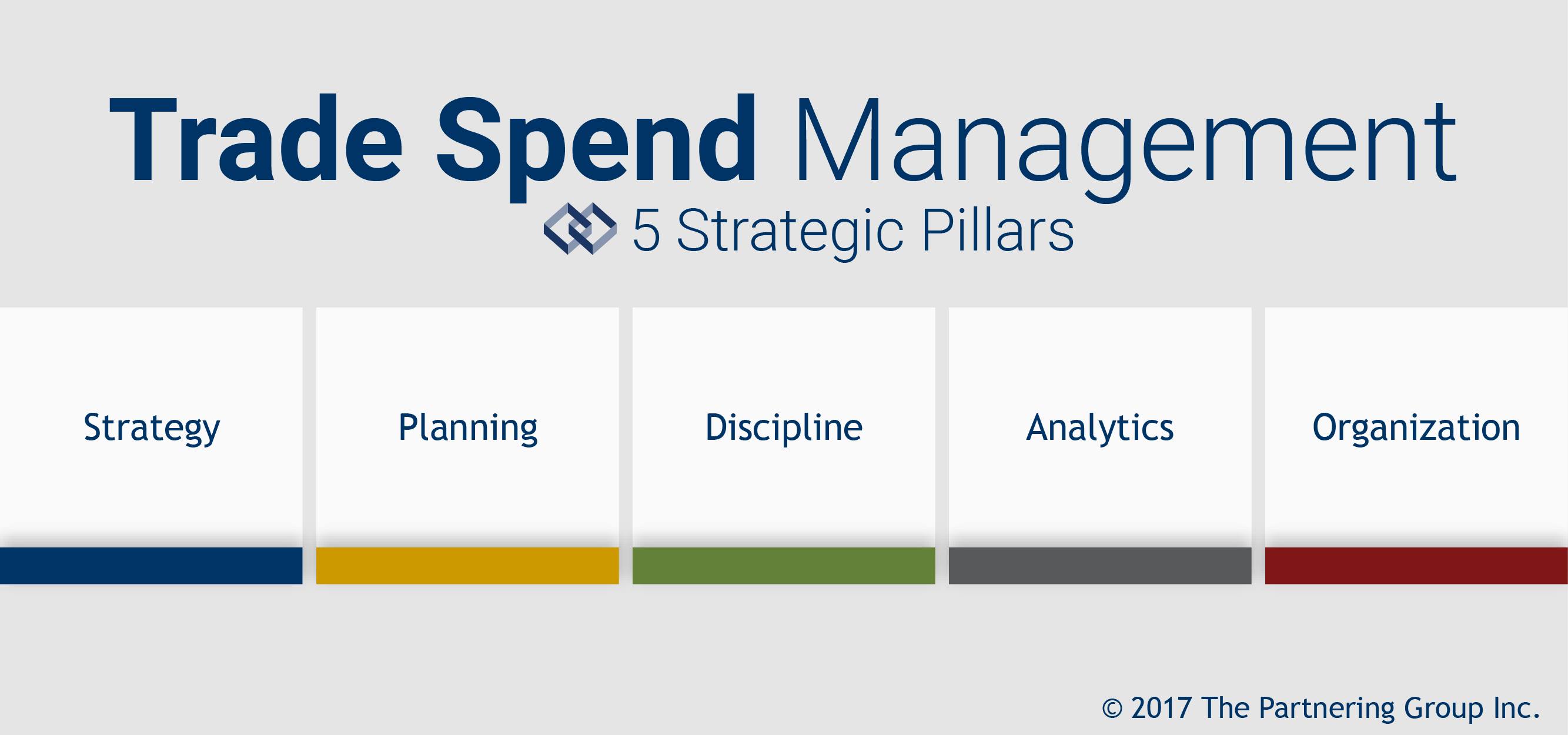
Effective trade investment: Critical Elements for Your Strategic Plan

 
By: Don Baker, Andy Buteux and John Wildman
DOES YOUR ORGANIZATION have an effective trade investment strategy? Given Trade’s sizeable impact on the P&L, most would answer, “Of course we do.” Then we ask to see the proof.
If we were talking about effective planning around activities related to Cost of Goods Sold, we’d expect to be shown plant layouts, line configurations, proposed formula changes, increasing throughput, eliminating waste, and detailed distribution planning.
However, it’s quite uncommon to see either the underpinnings or the application of such thinking behind the Trade line. Sure, there are data and PowerPoint presentations. But many of the facts don’t lead to conclusions; and many disparate insights don’t lead to changes in direction.
What would constitute an excellent strategy? For starters, collaboration between the P&L owner, marketing, sales and the trade marketing team on five strategic elements. These are simple in concept but challenging to implement in daily management:
  1. Solid Portfolio Plans
  2. Customer Segmentation with Channel Focus
  3. Price Architecture
  4. Supply Chain Impact on trade
  5. Fund Design
Each of these elements enables the overall plan and allows a company to invest in the face of ever-increasing competitive pressure and customer concentration.
Portfolio Plan. A clear Brand and Category investment strategy must outline the growth of the company’s brands. Just as importantly, and it should also outline expectations for the category. Brands should be valued across the company portfolio.
Customer Segmentation with Channel Focus.  This discipline should be in place and actually used to drive decisions. Many companies take an academic approach to this exercise, which can mean no one understands how the outcome became the outcome. It is crucial to maintain a living document that represents today’s reality with tomorrow’s plan for customers. Segmentation should be used to identify the winners and also those in the “on deck circle” who are performing well but are underdeveloped.
Price Architecture.  An everyday price and promotion strategy should articulate the value of the Brand/Segments/Items within the category. This document should house clear price/promotion guidelines for your own items as well as gaps and key price thresholds with respect to competitive items.
Supply Chain Impact. Many companies proficiently purchase commodities for COGS targets, but few deal with cost variances effectively. Organizations forecast finished goods and react, but many don’t monitor raw to finished good forecasting from a pricing and material availability perspective. So a broader plan for monitoring COGS variances and trade investment together is a critical practice.
Fund Design. Funding strategy is the key expression of how the first 4 elements are brought to marketplace. What performance-based funds are required to deliver your business objectives based on your brand’s key business drivers?
This list may seem fairly straightforward, but there are many hands are in the cookie jar! Not to mention the many silos among the constituents. Now is a good moment to take stock: How do the Trade Investment Strategic Pillars look at your company?

Wednesday, April 26, 2017

Amazon supply chain management pushes retail to the limit

AlexaCheater

Amazon supply chain managementHow to overcome the Amazon effect

When it comes to supply chain excellence, particularly in the retail sector, there is one behemoth dominating the landscape: Amazon. Amazon supply chain management is driving innovation and change at a pace that’s putting the pressure on other businesses to find a way to keep up, or fold.
The online retailer’s most recent patent focuses on drone technology, and would involve drones delivering packages with parachutes. It’s just the latest in a string of patents that span the gamut from smart stores to flying warehouses. Amazon is even entering the transportation space, signing agreements with the Air Transport Services Group and the Chinese government to enter into the freight cargo business – effectively cutting out the middleman.
It has leased 20 Boeing 767 aircraft to shuttle goods around the US, and helped ship at least 150 cargo containers from China since October 2016. It’s all part of the global expansion of ‘Fulfillment by Amazon’, which provides storage, packing and shipping to small independent merchants selling products on Amazon’s website.
As Jeff McCandless notes on a recent Multichannel Merchant blog, combating the Amazon effect requires technology and collaboration. You need to build a real-time, data-driven, cloud-based automation network to compete. That means fostering supply chain capabilities focused on just such an outcome.
Failure to innovate in the retail supply chain arena is already having negative financial repercussions for brick and mortar stores, especially when it comes to apparel. Amazon makes up about 7% of the US apparel market, and according to reports, that figure could increase to 19% by 2020. They’ve been called a competitor in every space.
And as other companies invest billions to keep up, the overwhelming majority of them still haven’t figured out how to remain profitable. They’re plagued by high delivery costs, rising return rates and shifting labor requirements, struggling to find the delicate balance between meeting customer demand and protecting margins.
This customer-centric drive is streamlining supply execution processes like manufacturing and delivery, but when it comes to supply chain planning, there’s still room to push the limits even further. It’s great to offer same day shipping, but what happens if there’s a catastrophic level disruption at the origin source? Things like natural disasters, unexpected supplier shutdowns or even labor disputes within your own four walls – all can lead to delays and cancelled orders. Your supply chain needs to respond and course correct as fast as possible.
You’ll need to revolutionize your supply chain planning, implementing processes like concurrent planning and connecting your data, processes and people. Creating a consolidated view of your entire supply chain will enable you to plan expected performance, monitor progress and respond to disconnects when reality hits. Find a way to know sooner and act faster.
Functionality like rapid what-if scenario simulations with versioning, means you’ll be able to get snapshots of the past, present and possible future state of your supply chain. And you’ll definitely need to breakdown silos and promote cross-functional collaboration.
Amazon has pushed the retail supply chain to its limit, and it appears the online giant has no plans to stop anytime soon. Those left in its wake have no choice but to embrace change, innovation and find new ways to thrive.

From Diapers to Soda, Big Brands Feel Pinch as Consumers Pull Back

By Sharon Terlep, Jennifer Maloney and Annie Gasparro  Features Dow Jones Newswires
 
The biggest sellers of consumer products from soda to diapers are sounding a cautious note on shopper spending amid broader retail woes.
Executives from Procter & Gamble Co., PepsiCo Inc. and Nestlé SA said slowed spending in the U.S. cut into results in the most recent period, though they don't all agree on the reasons. Several said they expect business to pick up later in the year.
Some blamed the weak start of the year on higher gas prices, bad weather and other external factors, while other executives pointed to shifting consumer tastes. Analysts say some big brands, such as Gillette and Yoplait, are losing ground to upstarts. Overall purchases of consumer packaged goods in the U.S. declined 2.5% in unit terms in the first quarter, according to Nielsen.
"There is probably more sources of volatility today that at any other time in history," P&G Chief Financial Officer Jon Moeller said Wednesday in a call with reporters.
The most recent period was P&G's weakest of the fiscal year as organic sales -- a closely watched metric that strips out currency moves, acquisitions and divestments -- increased just 1%.
Mr. Moeller said consumers are cutting back purchases, aggressively seeking deals and drawing down supplies at home. At the same time, he said, a growing affinity for beards has played a big part in driving down razor sales, which contributed to a 6% organic sales decline for P&G's grooming unit.
Although pricing increases helped PepsiCo post growth in its beverage and snacks businesses in its latest quarter, sales declined in its Quaker Foods North America unit, which sells grocery staples such as Rice-A-Roni, Aunt Jemima and its namesake oatmeal.
PepsiCo, like big food rivals Kraft Heinz Co. and Nestlé, is struggling as consumers shift away from diet sodas and processed foods to fresher and healthier options. It has launched new products, such as a premium bottled water brand, to adjust to the shift.
"Our next challenge is how do we leverage our relationships with retailers to reinvent the center of the store?" said CEO Indra Nooyi on a conference call Wednesday. "And we need to do that in order to bring interest back to that whole cereal aisle and therefore, Quaker."
For food and nonfood staples, big brands are struggling more than the overall industry. The 20 largest consumer packaged goods companies last year had flat sales while smaller ones posted sales growth of 2.4%, according to Nielsen.
Wal-Mart Stores Inc., meantime, has been reducing inventories and slashing prices as it fights to compete with Amazon.com Inc. and European discounters moving into the U.S. Those cuts are eating into its own profit and, in turn, leading the world's biggest retailer to put pressure on its vendors.
Kimberly-Clark Corp. this week reported its first quarterly organic sales decline in 13 years driven largely by falling demand in North America. The maker of Kleenex tissues and Huggies diapers lowered its forecast for the year but said it expects better performance as the year progresses.
Nestlé Chief Executive Mark Schneider said weak U.S. demand isn't an issue isolated to Nestlé and that it reflects a breakdown in the usual relationship between economic growth and consumer spending. At the same time, he said, intense competition is making it harder to push through price increases.
"In spite of good economic data we are seeing a large amount of uncertainty" in the U.S., Mr. Schneider said last week on an investor call. "When that uncertainty subsides it will be good news."
While growth is stronger outside the U.S. for many companies, foreign markets also are rife with volatility. P&G said everything from the Brexit in Europe to political uncertainty in developing markets has made for bumpy times in overseas operations.
The dynamics are driving tough choices for companies as they are forced to decide between reducing prices and ceding market share. PepsiCo and Coca-Cola Co. have been shrinking packages and raising prices. P&G has been lowering prices in some of its biggest categories such as diapers and razors, forcing down prices of rivals as well.
"Don't ask me who started it," Kimberly-Clark Chief Executive Thomas Falk said of price wars in consumer products. "Everybody thinks it's the other guy."
Procter & Gamble Co. and PepsiCo Inc. posted lackluster sales in the most recent quarter as producers of some of America's biggest consumer products struggle to give shoppers what they want.The two companies, which make everything from soda and chips to diapers and toothpaste, said Wednesday that slowed spending in the U.S. cut into their profits. The results highlight the challenges makers of food, beverages and other consumer staples are facing as they try to adapt to changing tastes. Analysts say some big brands, such as Gillette and Yoplait, are losing ground to upstarts.
Overall purchases of consumer packaged goods in the U.S. declined 2.5% in unit terms in the first quarter, according to Nielsen. Big brands are struggling the most. The 20 largest consumer packaged-goods companies last year had flat sales while smaller ones posted sales growth of 2.4%, Nielsen says. There are "probably more sources of volatility today that at any other time in history," P&G Chief Financial Officer Jon Moeller said Wednesday in a call with reporters.
U.S. economic growth slowed in the fourth quarter, and experts say the sluggishness continued into the start of this year. Economists surveyed by The Wall Street Journal are forecasting that gross domestic product, a broad measure of the goods and services produced across the economy, advanced by a tepid 1% in the first quarter from the previous three months.
That would mark a slowdown from the roughly 2% trend that has prevailed through most of the current expansion and which President Donald Trump is seeking to double. The U.S. Commerce Department releases its first read on first-quarter GDP on Friday.
Household spending has been healthy since the 2009 recession, helped by rising wages and falling gas and consumer prices. But much of the spending has been focused on home improvements, automobiles and entertainment.
Overall consumer spending in the first quarter was stymied by higher inflation in January and February and will likely pick up for the duration of the year, said Chris Christopher, director of consumer economics for IHS Markit. But he said companies that sell household staples face longer-term challenges.
"There are some behavioral changes: A lot more is going online, people are not getting married, they're living in smaller spaces, and they aren't having as many children," he said. "That's not going to turn around very fast." P&G's latest quarter was its weakest of the fiscal year as organic sales -- a closely watched metric that strips out currency moves, acquisitions and divestments -- rose just 1%.
Mr. Moeller said consumers are cutting back purchases, aggressively seeking deals and drawing down supplies at home. At the same time, he said, a growing affinity for beards has played a big part in driving down razor sales, which contributed to a 6% organic sales decline for P&G's grooming unit.
Although pricing increases helped PepsiCo post growth in its beverage and snacks businesses in its latest quarter, sales declined in its Quaker Foods North America unit, which sells grocery staples such as Rice-A-Roni, Aunt Jemima and its namesake oatmeal.
PepsiCo, like big food rivals Kraft Heinz Co. and NestlĂ© SA, is struggling as consumers shift away from diet sodas and processed foods to fresher and healthier options. It has launched new products, such as a premium bottled water brand, to adjust to the shift. "Our next challenge is how do we leverage our relationships with retailers to reinvent the center of the store?" said CEO Indra Nooyi on a conference call Wednesday. "And we need to do that in order to bring interest back to that whole cereal aisle and therefore, Quaker."
Overall for food and nonfood staples, big brands are struggling the most. The 20 largest consumer packaged-goods companies last year had flat sales, while smaller ones posted sales growth of 2.4%, according to Nielsen.
Anna Kunz, a 42-year-old painter, said she has started shopping for fresh produce and meat instead of canned or boxed food in recent years, because she wants her 13-year-old daughter to eat healthy. "Clean eating. That's what it's all about," she said at a grocery store in Chicago, with sugar snap peas and strawberries in her cart. She says that is much harder to do on a budget, and even though she is nervous about the economy, "It's health. You've just got to do it."
While 17% of U.S. consumers reported an improvement in household financial conditions over the past six months, it wasn't enough to trigger higher spending, said John Baumgartner, a food analyst at Wells Fargo, based on its quarterly consumer survey. Respondents also reported a 21% rise in eating leftovers at the expense of grocery purchases.
Hershey Co., which reported lower-than-expected sales growth Wednesday, said people are snacking more often, but U.S. food retail trends are "choppy" overall, perhaps exacerbated by delayed tax refunds and more online shopping. The chocolate giant lowered its sales forecast for the year "given the uncertainty regarding overall U.S. brick-and-mortar retail trends."
Wal-Mart Stores Inc., meantime, has been reducing inventories and slashing prices as it fights to compete with Amazon.com Inc. and European discounters moving into the U.S. Those cuts are eating into Wal-Mart's own profit and, in turn, leading the world's biggest retailer to put pressure on its vendors.
Kimberly-Clark Corp. this week reported its first quarterly organic sales decline in 13 years, driven largely by falling demand in North America. The maker of Kleenex tissues and Huggies diapers lowered its forecast for the year but said it expects better performance as the year progresses.
Nestlé Chief Executive Mark Schneider said weak U.S. demand isn't an issue isolated to Nestlé and that it reflects a breakdown in the usual relationship between economic growth and consumer spending. At the same time, he said, intense competition is making it harder to push through price increases.
"In spite of good economic data, we are seeing a large amount of uncertainty" in the U.S., Mr. Schneider said last week on an investor call. "When that uncertainty subsides it will be good news."
While growth is stronger outside the U.S. for many companies, foreign markets also are rife with volatility. P&G said everything from the Brexit in Europe to political uncertainty in developing markets has made for bumpy times in overseas operations.
The dynamics are driving tough choices for companies as they are forced to decide between reducing prices and ceding market share. PepsiCo and Coca-Cola Co. have been shrinking packages and raising prices. P&G has been lowering prices in some of its biggest categories such as diapers and razors, forcing down prices of rivals as well.

Tuesday, April 25, 2017

The cutthroat jobs strategy Amazon uses to conquer retail


Jonathan and Michele Rhudy recently moved their Richmond, Va., consulting business into new digs and bought all new stuff — office supplies, furniture and even a coffee maker.
There was no question in their minds where all of those items, plus paper clips, reams of paper and every last doodad, would come from: Amazon.
Jonathan said he discovered the magic of Jeff Bezos’ e-commerce giant almost a decade ago while he and his wife, both busy running their small business, were raising their three kids and were always running out of diapers.
“I quickly realized how, being a family of five, we didn’t have time to go to the store,” he told The Post this week.
The Rhudys’ buying habits mimic those of millions of Americans, and that surely makes Bezos very happy — not to mention immensely wealthy.
Bezos, who has grown his humble, money-losing online book shop in 1995 into one of the most powerful economic engines on Earth — selling everything from airplane parts to zebra-print dresses — saw his net worth grow alongside his company. This week, he became the world’s second-richest person, worth $76 billion.
Amazon, which is also in the movie-producing business — it won an Oscar for its “Manchester by the Sea” — is now the fourth-most-valuable company in the United States and employs 341,400 full- and part-time employees.
Amazon will add another 100,000 full-time jobs over the next 18 months, Bezos proudly announced this year.
The new jobs are great, but a closer inspection shows Amazon may simply be adding back jobs it helped kill off.
Modal Trigger
Jeff BezosGetty Images
For example, Amazon played a large role in eliminating more than 50,000 jobs in recent years from just three companies — Staples, Office Depot and Best Buy, public filings show.
In March, MarketWatch estimated that Amazon will destroy 1.5 million retail jobs in the next five years. And with its push into self-driving trucks, drone delivery, automated grocery stores and more, the site said the total number of lost jobs would likely be more than 2 million, concluding, “Could Amazon actually kill more American jobs than China did? It’s quite likely.”
In addition to capturing 50 cents of every dollar spent online, Amazon, according to a report by the Institute for Local Self-Reliance, a nonprofit research organization, is used for half the online shopping searches undertaken by US consumers.
In other words, Bezos knows what you want to buy before you buy it.
Critics are beginning to wonder if Amazon — with such control over retail sales, jobs, ad dollars and more — is good for America.
One thing is for sure: Bezos isn’t ready to slow down — he wants Amazon to control even more of Americans’ lifestyles.
A report several weeks ago from Bloomberg revealed that Amazon has invited executives from companies that make major consumer brands — like Nike, Oreos and Cheerios — to a meeting in May where the company hopes to convince them not to sell their products through Walmart and other big-box retailers.
Bezos wants the brands to be sold direct to consumers through Amazon.
The company also is spreading its wings deeper into media with its $50 million deal last week to stream 10 Thursday night NFL games next season. Bezos paid five times what Twitter paid for the streaming rights in 2016.
There is also chatter that Amazon will soon add freighters to its retail arsenal, which already includes trucks, plans for drones and some planes.
Not everyone is scared of Amazon’s growing influence and power.
“Retail always evolves and reflects society, and right now, consumers are getting more value for their money,” said Richard Kestenbaum, a partner in Triangle Capital. “That makes our society stronger and it forces other retailers to be more creative and competitive.”
But more and more are casting a wary eye on the Seattle company, whose brown boxes with the “smiling” arrows are ubiquitous.
Critics say Amazon is crushing local jobs and tax bases.
“People need to have jobs to be able to afford online delivery, and Amazon has knocked out so many private-sector retail jobs and will knock out public-sector jobs as well,” said Burt Flickinger, managing director of Strategic Resource Group, a retail consulting firm.
For years, there has been talk about Amazon ruining better-paying retail jobs and replacing them with lower-paying ones. It has tried to fight back — but there is still a strong belief that jobs at Bezos’ company don’t pay well.
“This is a company that is so sophisticated in its use of the web and supply chain, but it adopts this retrograde way of employing labor,” said Nelson Lichtenstein, director of the Center for the Study of Work, Labor and Democracy at the University of California Santa Barbara.
Amazon played a large role in eliminating more than 50,000 jobs in recent years from just three companies — Staples, Office Depot and Best Buy, public filings show.
“Here are these 500 to 800 workers toiling away in a big warehouse, but many aren’t employed directly by Amazon, and if they have a complaint, Amazon says, ‘It’s not our problem,’ because they are contract workers.”
Most of the jobs Amazon creates are low-paying warehouse and customer-service positions. The warehouse jobs pay, on average, $12.32 an hour, 9 percent less than the industry average at other warehouses, according to ILSR, which looked at 1,300 Amazon wage postings on Glassdoor.com.
Recent Amazon ads for customer service reps who work from home show that the company is paying just $10 an hour— or just $2.75 more than the federal minimum wage.
Although Amazon defends its salaries, touting that they’re 30 percent higher than what other retailers pay, critics say the comparison is not apples to apples.
Bezos disagrees.
“These jobs are not just in our Seattle headquarters or in Silicon Valley — they’re in our customer-service network, fulfillment centers and other facilities in local communities throughout the country,” he said in a statement.
But research shows that Amazon’s job gains have come at the expense of other jobs and that the quality of the Amazon positions is inferior, with about 40 percent of the workforce in its warehouses considered contract or temporary employees, according to ILSR.
For years, one of Amazon’s biggest edges over competitors was that it didn’t collect state sales tax, giving it a price advantage equaling as much as 9 percent in states like New York. That income, experts say, deprived states of revenue and contributed to budget shortfalls.
That changed on April 1. Amazon is now collecting state taxes in the 45 states that have them, according to the Tax Policy Center.
“But the damage was done,” said Flickinger. “The money that was not collected can’t be made up, and those budget deficits are going to force state governments to lay off employees at unprecedented rates.”
Bezos is hardly cowed by critics or allegations that Amazon is a job wrecker.
Such taunts almost seem to embolden the brash entrepreneur, whose vision for the company includes convenience stores without cashiers, deliveries with drones and, irony of ironies, opening bookstores.
Bezos has shown an unlimited ability to spend money to accomplish his goal of dominating different sectors.
And now the grocery business may be in his cross hairs. He is developing an Amazon Go store, which will allow the company’s Prime customers to pull items off shelves and carry them home without passing through a cashier’s line or opening their wallets.
Customers simply scan their phones on a kiosk when they enter the store, and Amazon technology charges their account after they leave the store.
The stores require way fewer employees — and could drive rival grocers out of business.
Bezos’ hiring announcements generate excitement in the media, most recently in January, when he revealed a plan to add 100,000 employees over the following 18 months.
But left unsaid are all the jobs quietly killed off over the years — in bookstores, electronics chains, office-supply shops and soon, perhaps, supermarkets.
And maybe, too, another block in another town left a little less active.