Thursday, February 22, 2018

How Does Stress Influence Consumers’ Eating Habits?

The Lempert Report: Researchers found a “social” component to food that evokes feelings of comfort.According to the American Psychological Association, 38% of adults report that they have either overeaten or eaten unhealthy foods in the past month because of stress. And as we reported in our 2018 Trends Forecast, Americans are more stressed out than ever before.
A new study on comfort food was conducted by researchers at the University of the South in Sewanee, Tenn., and the State University of New York at Buffalo, published in Appetite. The study, entitled “Threatened Belonging and Preference for Comfort Food Among the Securely Attached,” sheds some light on why these comfort foods are so comforting.
The researchers found that there is a “social” component to foods that provide us comfort.
Ranker, the website on which you can vote on just about everything, published their findings on their survey “The Most Comforting Comfort Food” to find out which foods top the list. No. 1, no surprise, was chocolate, which we could agree with based on the nutritional and emotional proven benefits. But No. 2? That was grilled cheese!
So for retailers that are located in areas that employ high-stress jobs, they may well be suited to create a “comfort cafe” at the front of the store where people can stop to enjoy these foods or take them home rather than having to navigate the aisles searching for their favorites, and adding even more stress to their over-stressed lives.

Tuesday, February 20, 2018

Albertsons Cos. Merging With Rite Aid, Will Rebrand Store Pharmacies

Albertsons Cos. logo
Albertsons Cos. and drugstore chain Rite Aid Corp. have entered into a definitive merger agreement under which privately held Albertsons Cos. will merge with publicly traded Rite Aid.
Current Rite Aid Chairman and CEO John Standley will become CEO of the combined company, with current Albertsons Cos. Chairman and CEO Bob Miller serving as chairman. The combined company is expected to be comprised of leadership from both companies and will be dual headquartered in Boise, Idaho, and Camp Hill, Pennsylvania. The name of the combined company will be determined by transaction close.
Rite Aid logoThe integrated company will operate approximately 4,900 locations, 4,350 pharmacy counters, and 320 clinics across 38 states and Washington D.C., serving 40-plus million customers per week. Most Albertsons Cos. pharmacies will be rebranded as Rite Aid, and the company will continue to operate Rite Aid stand-alone pharmacies.
The transaction has been approved unanimously by the boards of directors of both companies. The merger is expected to close early in the second half of calendar year 2018, subject to the approval of Rite Aid’s shareholders, regulatory approvals and other customary closing conditions.
Under the terms of the agreement, in exchange for every 10 shares of Rite Aid common stock, Rite Aid shareholders will have the right to elect to receive either one share of Albertsons Cos. common stock plus approximately $1.83 in cash, or 1.079 shares of Albertsons Cos. stock. Depending upon the results of cash elections, upon closing of the merger, shareholders of Rite Aid will own a 28 percent to 29.6 percent stake in the combined company, and current Albertsons Cos. shareholders will own a 70.4 percent to 72.0 percent stake in the combined company on a fully diluted basis. Immediately following completion of the merger and assuming that all Rite Aid shareholders elect to receive shares plus cash, Albertsons Cos. will have approximately 392.9 million shares outstanding on a pro forma and fully diluted basis. Following the close of the transaction and the share exchange, Albertsons Cos.’ shares are expected to trade on the New York Stock Exchange.

Integrated platform to offer ‘greater choice, convenience and access’

The companies say the combination will provide customers with flexible and convenient access to a full range of food, health and wellness offerings and will deliver significant value to customers, employees and shareholders by:
  • Enhancing the companies’ geographic footprint and creating local networks in attractive geographies. The new company will have an expanded footprint and be ranked first or second in 66 percent of the top metropolitan areas in the U.S. and will be ranked first or second in 70 percent of pharmacy locations based on Nielsen data. It will establish the leading integrated food, health and wellness retailer on the West Coast and will have a strong brand position in the Northeast.
  • Leveraging strong pharmacy network and rite aid’s pharmacy benefit management company, EnvisionRxOptions, to drive customer growth. The combined company will be positioned to drive incremental growth by deepening existing relationships and expanding reach across higher-value pharmacy customers. This will be achieved through a full suite of health and wellness capabilities, including specialty pharmacy offerings and in-store RediClinics in larger Albertsons Cos. stores and stand-alone Rite Aids. In addition, investing in preferred relationships with EnvisionRxOptions, other PBMs, and regional payors is expected to drive prescription growth.
  • Utilizing data analytics and integrated loyalty programs to drive growth and target new customers. The new company will capitalize on enhanced data and analytics to unlock profitable growth through new customer acquisition, new merchandising programs and demand forecasting. It will also create cross-branded opportunities for its loyalty programs, improving connections across a combined current base of 25 million active loyalty program participants.
  • Combining strong own-brand portfolios with extensive manufacturing and distribution network to drive revenue growth and operating efficiencies. The combination of Albertsons Cos.’ billion dollar own brands, including O Organics and Lucerneâ, and its manufacturing and operating capabilities, with Rite Aid’s own brands in health and wellness, including B4Yä and Daylogicä, and its pharmacy expertise will allow the combined company to drive growth opportunities and efficiencies across its purchasing, marketing, manufacturing and merchandising functions.
  • Serving customers when, where, and how they want to shop. The combined company’s expanding omni-channel platform will provide customers with convenience, choice and flexibility through multiple in-store formats, digital channels and same-day food and prescription delivery options from stores and via Drive Up & Go.
“This powerful combination enables us to become a truly differentiated leader in delivering value, choice and flexibility to meet customers’ evolving food, health and wellness needs,” said Standley. “The combined platform positions Rite Aid to capitalize on our pharmacy expertise and expand and enhance our pharmacy footprint. We are confident that delivering improved customer experiences and value will drive growth and profitability while creating compelling long-term value for shareholders.”
“The hallmark of Albertsons Companies’ business has been to become the favorite local supermarket of our customers,” said Miller. “We have always put our customers first, and our combination with Rite Aid will enable us to even better serve the valuable pharmacy customer by providing a fully integrated one-stop-shop for our customers’ food, health and wellness needs. I have long known the excellent management team at Rite Aid, and we share a singular focus on superior customer service and a clear vision and strategy to become the favorite local supermarket and pharmacy to shoppers in every neighborhood we serve.”
Lenard Tessler, vice chairman and senior managing director at Cerberus, commented, “As a long-term partner to Albertsons Companies’ world-class management team, this transaction highlights Cerberus’s confidence in this team and our conviction in the underlying customer focus driving this combination. As significant shareholders, we are very optimistic about the future of the combined company.”

Financial details

The combined business will benefit from an enhanced financial profile and solid capital structure, which will support growth and expansion. On a pro forma basis, the combined company is expected to generate year one revenues of approximately $83 billion (excluding potential revenue opportunities) and year one Adjusted Pro Forma EBITDA of approximately $3.7 billion (including run rate cost synergies). The combined company’s pro forma net leverage ratio is expected to be 3.8x at transaction close (including run rate cost synergies).
The combined company expects to deliver annual run-rate cost synergies of $375 million in approximately three years and access potential annual revenue opportunities of $3.6 billion. More than 60 percent of the cost synergies are expected to be realized within the first two years post-close. Identified revenue opportunities primarily include partnering with payors, including Rite Aid’s PBM, EnvisionRx, through preferred networks to drive additional high-value customers, connecting Rite Aid’s reliable pharmacy customer base to Albertsons Cos. through loyalty programs and targeted marketing, leveraging Albertsons Cos.’ grocery capabilities and Rite Aid’s pharmacy expertise to enhance the customer offering, and driving traffic through the omni-channel experience. Cost synergies will be achieved primarily through procurement savings, leveraging efficiencies realized by a combined supply chain, combined distribution and fulfillment channels, and leveraging manufacturing capabilities.

Governance

The board of directors will be comprised of nine directors, four of whom will be named by Albertsons Cos. (including Bob Miller and Lenard Tessler), four of whom will be named by Rite Aid (including John Standley), and one of whom will be a jointly selected director. A majority of the board will be independent. Tessler will serve as lead director.

Rite Aid aims to become ‘differentiated leader in food, health and wellness’

This morning, Rite Aid sent out a letter to its employees announcing the agreement. In the letter, Standley and Kermit Crawford, Rite Aid president and COO, outline the deal and some of the motivations behind it. See the letter in its entirety here:
Dear Rite Aid Team,
As you know, we have been working diligently as a team to provide an outstanding experience for our customers while also identifying ways to build momentum as an organization. Today, we are excited to share some important news that will make the “new” Rite Aid part of a leading food, health and wellness company with expanded capabilities to serve customers where and how they want to shop.
This morning, we announced that Rite Aid and Albertsons Companies, one of the nation’s largest grocery retailers, have entered into a merger agreement to combine our complementary businesses and create a truly unique enterprise that operates approximately 4,900 locations, including 4,300 pharmacies and 300 clinics.
For Rite Aid, this merger is transformational because it takes us from being a strong regional pharmacy player and combines us with the number two conventional grocer in the country to create what we believe will be the differentiated leader in food, health and wellness. We will be an important part of a company with projected annual revenue of $83 billion and will rank first or second in most of the markets in which we operate. It will also provide us with 1,800 additional pharmacy counters and access to Albertsons’ expertise in food and consumables, including their extensive own brands portfolio and food manufacturing capabilities that will help us in further transforming the front-end of our stores. The new company will be financially stronger than we are today and will generate significant cash flow to reinvest in the business.
In addition, the associates at Albertsons, which operates 20 well-known banners like Safeway, Shaws and Jewel-Osco, are ideal partners because they share our vision for providing an outstanding customer experience.
As we bring Albertsons and Rite Aid together, John will be leading the combined organization as CEO. Albertsons’s current Chairman and CEO Bob Miller will serve as Chairman. The company’s board of directors will include four directors named by Rite Aid, four directors named by Albertsons and one jointly appointed independent director. The company will be dual headquartered in Boise, Idaho, and Camp Hill, Pa., and is expected to trade on the New York Stock Exchange.
Over the past several years, your focus and commitment have enabled us to transform our company through initiatives such as our wellness+ loyalty program and expanded clinical services like our highly successful flu shot program. It’s even more impressive that we have continued this transformation during a time of significant change for our organization and a period of strong competition within our industry.
As a leadership team, we’re constantly exploring options to find the best way forward, and we believe this proposed combination gives us an unprecedented opportunity to further transform the retail and healthcare landscape while accelerating our strategy for the “new” Rite Aid. Most Albertsons pharmacies will be rebranded as Rite Aid, and we will continue to operate Rite Aid stand-alone pharmacies, creating a network that ranks first or second in 70% of our pharmacy locations.
In addition to utilizing our existing pharmacy network, our EnvisionRxOptions PBM will be critical in enabling us to generate additional traffic in our combined store networks, and RediClinic and Health Dialog will continue to serve as important offerings in meeting the health and wellness needs of our patients. Together with Albertsons, we will have greater resources like the ability to leverage our loyalty programs to drive cross-traffic between grocery and pharmacy locations and gain enhanced customer insights.
Under the financial terms of the agreement, in exchange for every 10 Rite Aid shares, Rite Aid shareholders will have the right to elect to receive either one share of the combined company and $1.83 in cash or 1.079 shares of the combined company. The merger, which does not affect the transfer of stores to Walgreens Boots Alliance or the support we have agreed to provide to Walgreens-owned Rite Aid branded stores, is expected to close in the second half of calendar 2018. Until then, Albertsons and Rite Aid will continue to operate as separate companies. The transaction is also subject to approval by Rite Aid shareholders, regulatory agencies and other customary closing conditions.
This is certainly a lot of information to process, and we understand that today’s announcement will generate a number of questions. We encourage you to read the press release below for additional information about the transaction. In addition to holding team meetings throughout our organization over the next few days, we will be sharing more information with you in the coming weeks and months.
This proposed combination is an exciting opportunity to create a truly differentiated leader in the food, health and wellness space. As we look to make the most of this opportunity, the most important thing we can do is to continue supporting each other in effectively serving our customers, who rely on us every day to meet their health, wellness and shopping needs.
We have an extraordinary team with a proven ability to deliver a great Rite Aid experience, which should give us tremendous confidence that we can continue to drive positive momentum throughout our business in the weeks and months ahead. Thanks for all of the great work you do each and every day in making Rite Aid a trusted destination for health and wellness. We look forward to working together in taking these efforts to an even higher level heading forward.

Amazon is quietly coming after dollar stores — and it's a brilliant move

10 and under
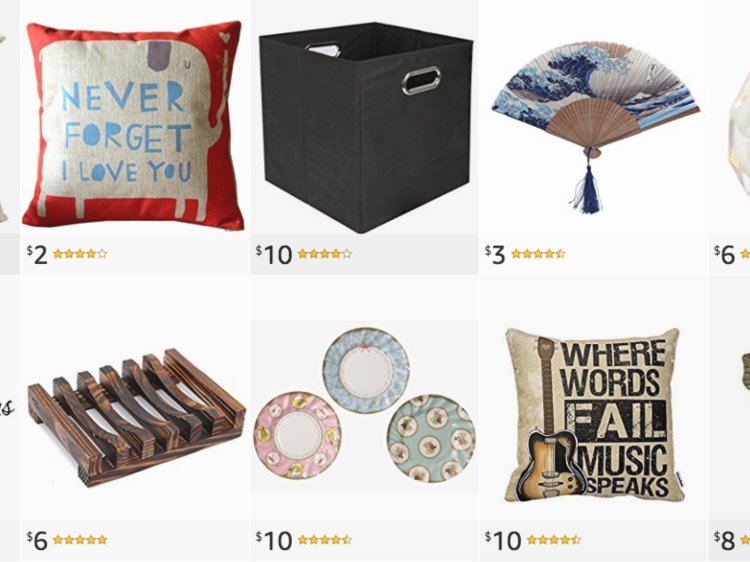
Amazon is selling items like these for $10 or less.
Amazon.com
  • Amazon has a new area on its website for "$10 and under" items that come with free shipping.
  • The merchandise is offered by third parties, and the section is full of kitschy items.
  • This is usually the domain of dollar and off-price discount stores, which have been thriving in recent years.


Amazon is famous for its low prices, but not even it could compete with dollar and discount stores.
A new section on the website attempts to change that by curating and displaying items that cost $10 or less, all offered with free shipping. The merchandise is offered by Amazon's third-party merchant partners and in most cases does not ship directly from the company.
Though it launched quietly, the initiative is a clear move in on dollar and discount stores' turf. The kitschy assortment of women's and men's clothing, electronics, gifts, home decor, household items, and watches looks very similar to what you might find at a Dollar Tree or Ross store. It's mostly decorative pillows, phone cases, and logo T-shirts.
The recent success of dollar stores and discount stores proves that there's a market for these goods when marketed appropriately. It makes sense that Amazon would attempt to move in this direction, even just slightly.
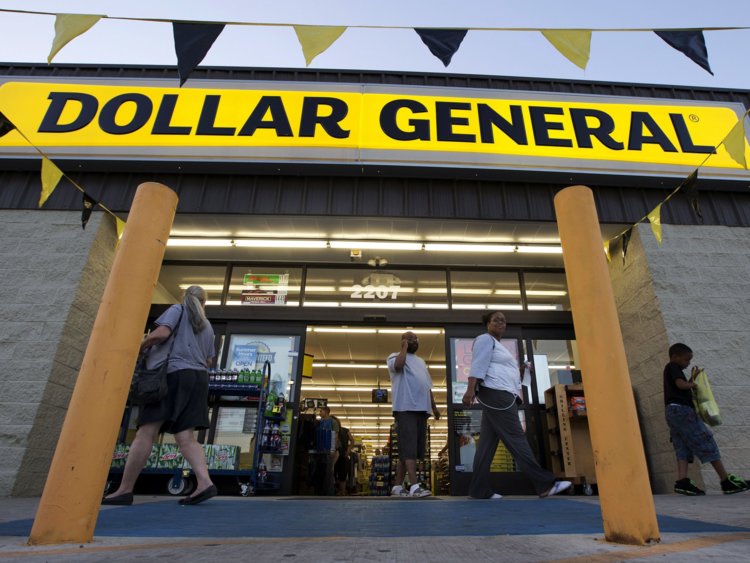
Dollar-store sales grew in the US from $30.4 billion in 2010 to $45.3 billion in 2015, according to the Wall Street Journal. Dollar General is planning on opening thousands of more stores, whileDollar Tree has beat earnings consistently. Ross — famous for its "dress for less" slogan — has beenhailed as a "retail treasure."
Dollar General
Dollar General is opening 900 stores in 2018.
AP
Walmart, the biggest discount retailer in the country, has also posted 13 consecutive quarters of sales growth in the US.
Dollar General CEO Todd Vasos told the WSJ his theory to explain the proliferation and success of dollar stores — and it's not good news for America's struggling middle class.
"The economy is continuing to create more of our core customer," he told the paper in December. "We are putting stores today [in areas] that perhaps five years ago were just on the cusp of probably not being our demographic, and it has now turned to being our demographic."

The company behind M&M and Snickers dismisses predictions of doom and gloom in the candy business

Mars Snickers
Snickers and Mars chocolate bars.
REUTERS/Dado Ruvic
  • Mars Wrigley Confectionary — the maker of M&M and Snickers — says that candy has a bright future in the US.
  • Customers’ desires to “hashtag treat yourself” is boosting a new type of sales, according to a top exec.
  • The rise of social media and gifting opportunities is also creating opportunities.

The candy business isn’t as sweet as it used to be.
Changing diet trends have forced Americans to reevaluate how they think about sweets. In January, Nestle announced plans to sell its US confectionery business for $2.8 billion, a move thatexperts said was prompted in part by increasing competition from upstart candy brands and the rise of healthier snacks.
However, Mars Wrigley Confectionary — the maker of M&M and Snickers — said that a new “Treat Report” on US trends proves that there’s no reason to fear for the future. According to the company, it has accounted for roughly four-fifths of the category’s 2% annual sales growth over the last few years.
candyFlickr/Luke Jones
“98% of our consumers told us that treating themselves can be part of a healthy lifestyle,” Berta De Pablos-Barbier, the president of Mars Wrigley Confectionery US, told Business Insider. “That is exactly in line with what we believe.”
She added: “People say, ‘Hey, hashtag treat yourself.'”
On Instagram, almost two million people have used the hashtag #treatyourself, in addition to the more than three million people who have used the hashtag #treatyoself.
The phrase, which originated with the NBC sitcom “Parks and Recreation,” represents two of the biggest opportunities for Mars in the treat business right now: rewarding yourself and bragging about it on social media.
According to the report, which polled 1,000 Americans using an online survey, 52% of millennials have purchased a treat “because they wanted to share a picture of it on social media.” De Pablos-Barbier says that Mars Wrigley is doubling down on making packaging “prettier,” both for social media and for gifting — another major area of growth in the candy business.
Roughly two-thirds of respondents said that sweet treats are a go-to gift, making it even more important for Mars Wrigley to package things in a way that is visually appealing.
“Gifting is on the high, sharing is on the high,” De Pablos-Barbier said. “74% believe a treat is always sweeter when shared with a friend.”

Monday, February 19, 2018

How to Create Loyal Retail Employees

February 17, 2018
how to create loyal retail employeesYou don't want the reason you have loyal retail employees to be because they don't ask for a raise or they've been there for a long time without challenging you. You want loyal retail employees who are passionate about your business and you are constantly working to develop.
This past week I discovered Mr. Steve, a guy who tweeted, “Barnes and Noble just fires almost every single receiving manager as a cost cutting measure. I worked with them for over 17 years and my weekly Storytimes are massively popular. And in the blink of an eye, I'm fired.”
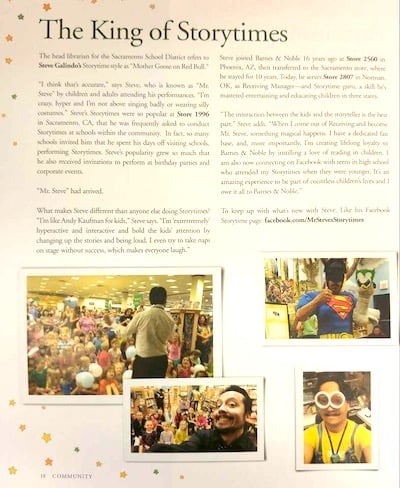
Mr-steve.jpgHe was featured in this article he posted on Twitter as,The King of Storytimes.
The location he worked at commented on his Facebook page, “The Norman store loves Mr. Steve and is mourning in the light of corporate staff cuts. There simply are no words for what Mr. Steve has meant to our store and to the Norman community.”
How do you develop trust and loyalty in your employees so they add to your brand like Steve?  

Here are 15 ways to create loyal employees:

1. Have a Winning Company Culture. You have to model respect for everyone from the janitor or busboy, to the warehouse clerk to the salesperson on the floor, to your vendors. When respect is given while managing employees, it is usually respected. An additional bonus is loyal employees spread the word and potential new hires will share similar values.
2. Guard The Doors. You can’t just hire whoever will work a shift once a week and expect them to sign-on to your values. You need to make sure it is a cultural fit and not just a convenience fit.
3. Find Out What Interests Each Employee. Sit down with your new hires and ask them about their favorite projects, what they’ve done that they love, the moments when they’ve felt most energized at their previous jobs, and the passions they have outside work. Armed with that knowledge, you can build loyal employees right from the start. is one of the most useful ways to drive loyalty especially when managing Millennials who need a greater purpose than just selling stuff.
4. Lead the Team. You can’t hang out in the back office and hope people do their jobs. Leading means being seen, creating goals and promoting passions and opportunities, but it also means correcting bad behaviors and letting go.
5. Give Back. Younger employees especially are concerned and motivated by how your business is making your community a better place, not just a paycheck. Whether through ongoing programs or even a day when you all go and pitch in at a non-profit, your mission has to be bigger than just selling stuff.
6. Clear Communication. You can’t manage by email. Taking the time to make sure everyone understands exactly what their job is and how to do it is crucial. Those who are really with you need you to communicate boundaries, not just goals.  If you’re not comfortable leading and communicating, join Toastmasters and get some practice.
7. Review, Reward, and Recognize. Employees want to know how they are doing. Younger employees have grown up with constant reinforcement. While that is not practical in many settings, if you don’t give it to them, they won’t feel good about working for you.
8. Pay Better Than You Have To. It’s simple, people with greater work ethics generally won’t work for less than they feel they are worth. Hiring at minimum wage and resenting paying new minimum wage laws makes it a them versus us which employees pick up on. Good people cost more if you want them to sell more. And...when they are out there doing amazing work, other companies will try to poach them with more money.
9. Perks. The most common perks in retail are employee discounts. Finding out what is meaningful to your crew is easy – ask them. While it might be a 401K for some, a membership to SoulCycle or free parking might be motivating too.
10. Training. No one comes to your store fully formed. A culture of training means change and upgrade is a way of life. Investing in your crew shows them you care and gives them new tools to keep from becoming jaded.
11. Cross Train.  Your employee development plan should include working other departments or other jobs, if only for a few days, can help employees make connections between what they do and how other departments support or work together as well. Pigeonholing someone to one job or one department can make them grow bored and look for better opportunities to grow elsewhere.
12. Proper Tools. Frustrated employees are ones most likely to leave. Broken fixtures, old POS systems based on DOS, scanners that don’t work - all must be taken seriously if you want employees to stay.
13. Open Door Policy. Being heard is a big one for all of us. It shouldn’t have to take an appointment or a once a year review to talk to the boss. Be generous with your time, understand your employees, and encourage them; they may not have the same coping mechanisms as you do. You can also give them career coaching – it’s never in your best interests to let someone become stagnant.
14. Don’t Micromanage. It’s one of the hardest things not to do as an entrepreneur because you think no one can do it like you. But they could do it better if you let them. Give them proper training and mentoring and let them show you what they can do.
15. Keep A Wall. The best managers keep the pressure off the crew and remain positive. If sales are down, they aren’t sharing the worry and stress. That goes for personal lives as well. Let them do their jobs.
In Sum
I had a boss who once said, “Your job is when I say jump, you say ‘How high’?”
Employees aren’t animals, they are vital to any business success. And while I understand Barnes & Noble’s sales dropped 6% during the holiday quarter, a wholesale purge of employees like Steve who obviously added to customer delight seems short-sided.
Especially since Barnes & Noble, the one-time book-selling juggernaut, has been struggling to compete with Amazon by providing a better in-store customer experience.
And especially because those longtime and loyal employees still there saw the capricious actions of management and will re-examine their own loyalty to such a management team.
Retailers lose loyalty from employees because they often forget that it is about what the individual brings to the brand, not just the cost of their employment.
Use these tips to grow loyalty with your employees because when you make their day, they can make your shoppers’ day.
And that’s what drives customer loyalty and profitability.